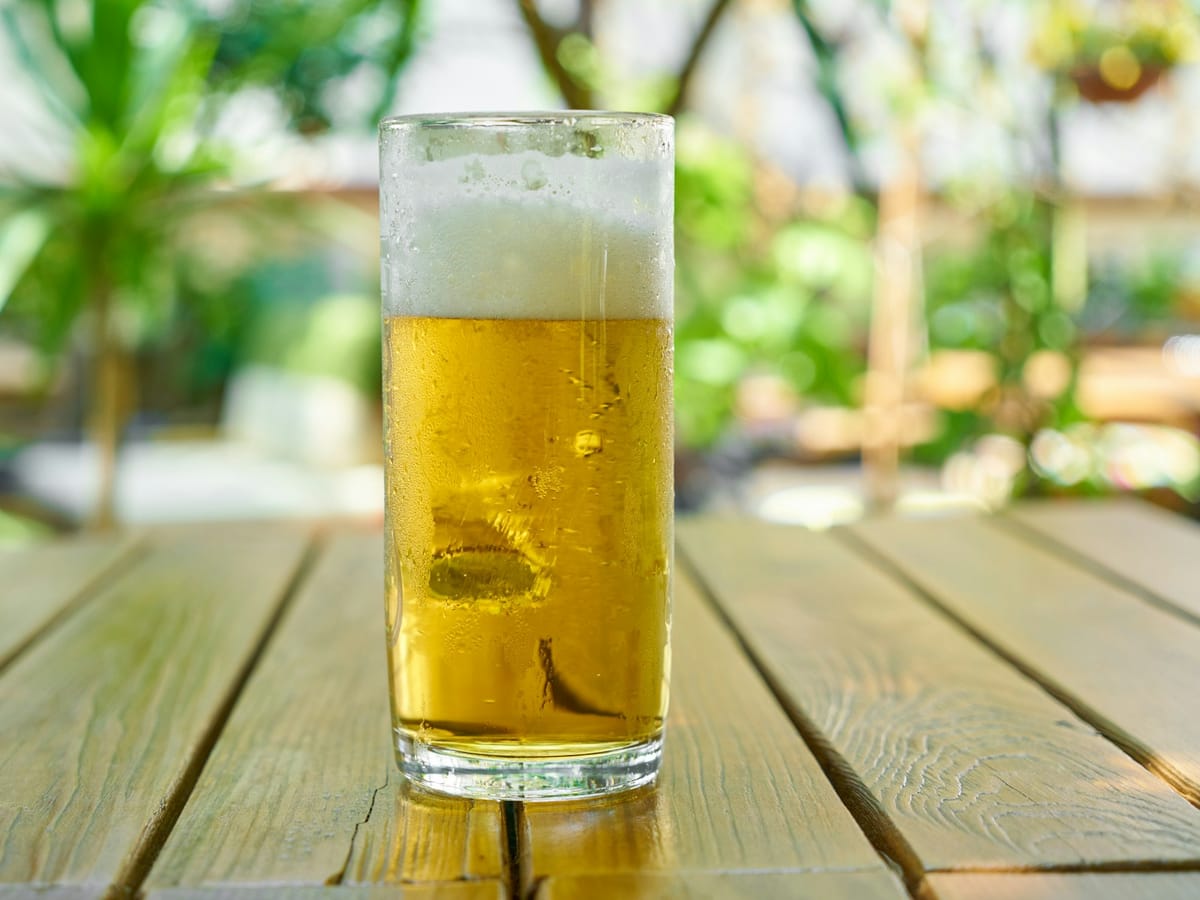
The Bebidário catalog has four non-alcoholic beers from the big brands: Heineken 0.0, Budweiser Zero, Corona Cero Sunbrew and Spaten Pro. They look the same on the shelf, but they differ in style, ingredients, calories and the way they get to zero. Below: what the Brazilian rule used to call alcohol-free, how the alcohol is taken out of a beer, and the four side by side.
What "alcohol-free" means in Brazil
In its original wording, Decree No. 6,871 of 2009 divided beer into two classes by alcohol content: alcohol-free, with up to 0.5% by volume, with no obligation to state the content on the label; and alcoholic, above 0.5%, with the percentage mandatory on the label. In 2019, Decree No. 9,902 removed this classification from the text and referred the detailed rules for beer to acts of the Ministry of Agriculture. The four in this guide sit well below that line: Budweiser Zero and Corona Cero declare 0.0%, Heineken states less than 0.03% and Spaten Pro is listed at 0.0% in the catalog.
How the alcohol is removed
There are two routes, sums up Wikipedia's "Low-alcohol beer" entry. The first is to prevent the alcohol from forming: grains with less sugar, yeasts that convert less sugar into alcohol or a fermentation stopped early. The second is to brew the beer normally and remove the alcohol afterward. Most modern breweries use vacuum evaporation, which lowers the boiling temperature and better preserves the flavor; another option is reverse osmosis, which passes the beer under pressure through a filter and does away with heating. Older processes simply heated the beer so that the alcohol evaporated first.
How we compared
We used each beer's sheet in the catalog: style, ingredients, calories and sugars when the manufacturer provides them, plus the pyramid and the 0 to 10 flavor profile. There are no prices: our shelf survey did not cover beers.
1. Heineken 0.0
Heineken 0.0
Beer · Netherlands
See the full profile →
Launched in 2017, it is made with water, barley malt, hop extract and the house's A-yeast. It goes through double fermentation, the alcohol is removed by vacuum distillation and natural flavorings are added afterward. It has 21 kcal and 0.9 g of sugars per 100 ml. The pyramid shows malt and herbal hops; in the profile, body 3.5 and bitterness 3, the most bitter of the four, close to the original Heineken, which scores body 4 and bitterness 3.
2. Budweiser Zero
Budweiser Zero
Beer · USA
See the full profile →
Ambev says it is made from traditional Budweiser, but the sheet does not detail the dealcoholization method. It contains water, malt, rice, hops and flavorings, and has 20 kcal per 100 ml. In the pyramid, malt, cereal and herbal hops; the profile (sweetness 2, body 3, bitterness 2) mirrors that of the alcoholic Budweiser. The brand suggests burgers, nachos with guacamole or pizza margherita.
3. Corona Cero Sunbrew
Corona Cero Sunbrew
Beer · Mexico
See the full profile →
It is the lightest in calories, with 15 kcal per 100 ml, and contains vitamin D, highlighted on the label; Ambev presents it as the world's first non-alcoholic beer with this vitamin. The ingredients are water, malt, rice, hops and vitamin D, with flavoring. In the profile, bitterness 1.5, the lowest in the group. The brand keeps the lime wedge in the neck and suggests queijo coalho, octopus vinaigrette or fish cakes.
4. Spaten Pro
Spaten Pro
Beer · Germany
See the full profile →
The only dark beer on the list, launched by Ambev in August 2026. It follows the Munich Dunkel style and contains water, malt, hops, yeast, whey protein and collagen, the latter two hydrolyzed: each 350 ml can has 10 g of protein, with no added sugar or sweetener. It is dealcoholized and made in Ribeirão Preto (SP). The pyramid departs from the other three, with roasted grain, dark caramel, vanilla and cocoa; the sheet does not give the calories.
Side by side
Calories: Corona Cero, 15 kcal; Budweiser Zero, 20 kcal; Heineken 0.0, 21 kcal, all per 100 ml. Ingredients: Heineken and Spaten are all-malt; Budweiser and Corona contain rice, like the alcoholic versions. Flavor: according to the catalog profile, Heineken has the most bitterness among the pale beers and Corona the least; Spaten Pro is the option for those who like dark beer, with roasted notes.
Light is not alcohol-free
Two beers in the catalog sold as lighter do contain alcohol: Michelob Ultra, with 4.2% and 26 kcal per 100 ml, and Stella Artois Pure Gold, with 4.3% and 34 kcal per 100 ml. They are lower-calorie versions, not non-alcoholic beers.
Drink responsibly.
Sources: Decree No. 6,871 of 2009, as amended by Decree No. 9,902 of 2019, on the Planalto legislation portal; Wikipedia, "Low-alcohol beer" entry; technical sheets and pyramids from the Bebidário catalog, based on Heineken and Ambev (Budweiser, Corona and Spaten). Consulted on 09/24/2026.