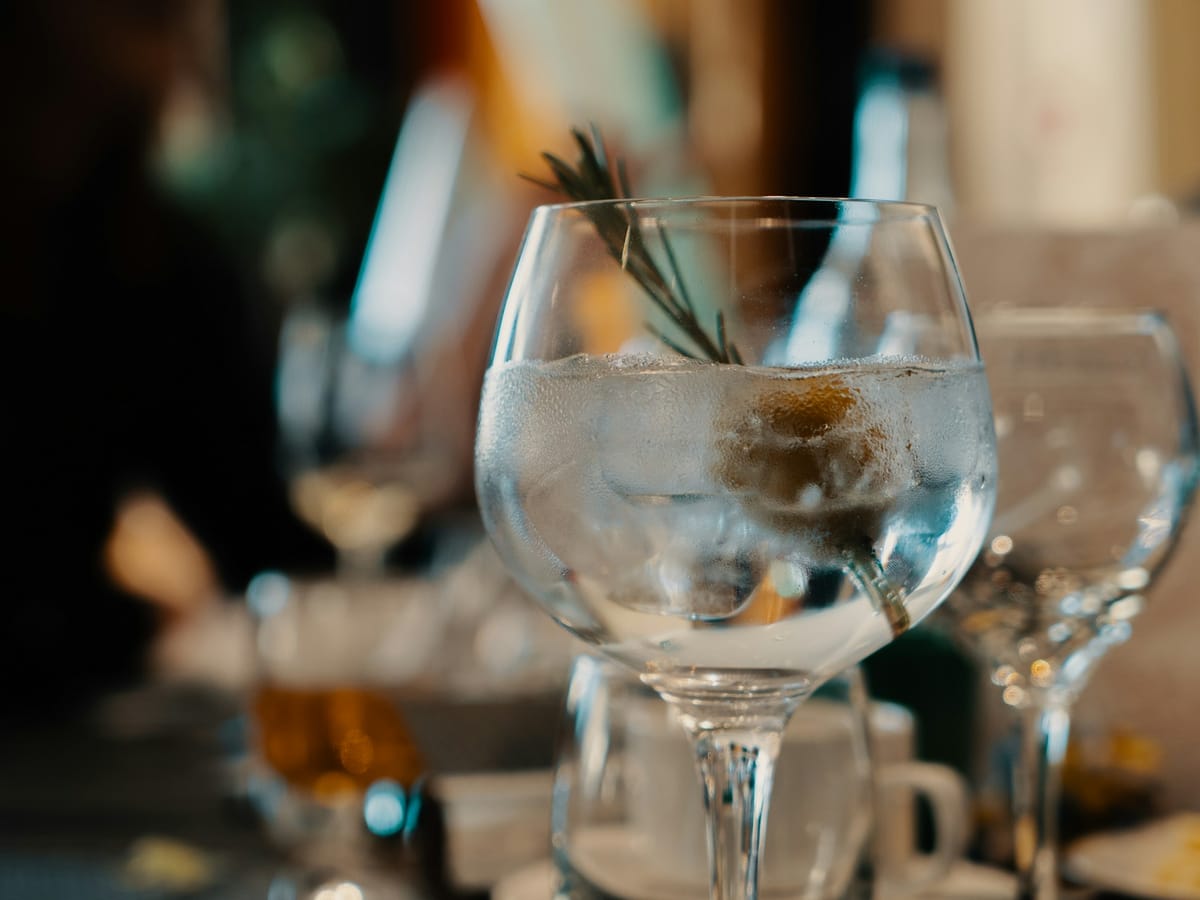
The gin and tonic is the simplest drink in the bar: two ingredients, ice and a garnish. Even so, the gin you choose changes the whole glass, because each label carries different botanicals and the tonic acts as a frame. Below: the reference recipe, the tonic from the catalog and six Bebidário gins, each of a different style, with the garnish the producer itself suggests.
How to build it
Difford's Guide uses 50 ml of gin and 120 ml of tonic water in a tall collins glass of about 355 ml, chilled beforehand. Pour in the gin and tonic, fill the glass with ice and finish with a lime wedge. For a smaller 295 ml highball glass, the guide scales the recipe down to 45 ml of gin and 90 ml of tonic. The page also draws attention to the quality of the tonic, which matters as much as that of the gin.
The tonic
Schweppes Tônica
Soft drink · Switzerland
See the full profile →
According to the label, Schweppes Tônica contains carbonated water, sugar, quinine, citric acid, natural flavoring and preservative. In the Bebidário profile, it scores sweetness 6.5 and bitterness 6 on a 0 to 10 scale: it is the source of the quinine bitterness in the drink. The brand also sells a sugar-free version, sweetened with aspartame and acesulfame potassium.
How we chose
Six gins of different styles (classic London Dry, citrus, floral, Brazilian and flavored), all with a shelf price in the stores surveyed and a serving suggestion published by the producer. It is not a ranking: the order runs from the most classic to the most flavored. The flavor comes from the catalog pyramid, built from the producer and specialists.
1. Tanqueray London Dry
Tanqueray London Dry
Gin · United Kingdom
See the full profile →
A London Dry with just four botanicals: juniper, coriander seed, angelica root and licorice, with four distillations. The pyramid shows juniper, lemon and black pepper from start to finish, and the strength is high, 47.3%. Diageo serves it the most traditional way: ice, tonic water and a lime slice.
2. Gordon's London Dry
Gordon's London Dry
Gin · United Kingdom
See the full profile →
The cheapest on the list has a recipe dating from 1769. According to Diageo, it contains hand-picked juniper berries and three more botanicals, and goes through three distillations. In the pyramid, eucalyptus, orange peel and almond open; juniper, citrus, black pepper and mint appear on the palate. The house proposes it in the Gordon's & Tonic.
3. Tanqueray No. Ten (citrus)
Tanqueray No. Ten
Gin · United Kingdom
See the full profile →
For those who want citrus: fresh oranges, limes and grapefruits are distilled first, in a small still nicknamed Tiny Ten, and only then do juniper, coriander, angelica, licorice and chamomile flowers go in. The pyramid highlights grapefruit, juniper and chamomile. Tanqueray recommends it with tonic water, as well as in the Ten Martini and the Gin Rickey.
4. Hendrick's (floral)
Hendrick's Gin
Gin · Scotland
See the full profile →
A Scottish gin of eleven botanicals, among them elderflower and chamomile, which after distillation receives essences of cucumber and Bulgarian rose. The pyramid follows the same line: rose and cucumber on the palate, cucumber and quinine on the finish. The house garnish swaps the lime for a cucumber slice, with tonic and ice.
5. Apogee London Dry (Brazilian)
Apogee London Dry
Gin · Brazil
See the full profile →
A London Dry distilled in Brazil with juniper, coriander, pink peppercorn, anise, mandarin, angelica root and lemon and orange peel. In the pyramid: juniper, coriander, pink peppercorn, fennel and tangerine. The brand recommends it with tonic and, for drinking neat on the rocks, with lemon peel. Another Brazilian gin in the catalog, Amázzoni, uses botanicals such as Brazil nut and cocoa, but did not appear in the stores surveyed.
6. Beefeater Pink Strawberry (flavored)
Beefeater Pink Strawberry
Gin · United Kingdom
See the full profile →
It starts from the nine-botanical Beefeater London Dry recipe and receives natural strawberry flavor, sugar and coloring; it is bottled at 37.5%. The pyramid shows strawberry from top to finish, with juniper and citrus in the middle, and the profile scores sweetness 3.5, well above the dry gins on the list. Beefeater suggests ice, tonic or lemonade and slices of fresh strawberry.
Tips for getting it right
A chilled glass and plenty of ice, as Difford's Guide asks: the ice goes in after the liquids and fills the glass. Follow the producer's garnish, which usually echoes a note from the pyramid: lime in the Tanqueray, cucumber in the Hendrick's, strawberry in the Beefeater Pink. Adjust the ratio starting from the recipe's 50 ml to 120 ml; with a higher-strength gin, such as the 47.3% of the Tanquerays, the drink is stronger for the same measure.
About the prices
These are shelf prices surveyed on 09/24/2026 at Divvino, Zona Sul, Bistek, Savegnago and Giassi; they change over time and from store to store. Hendrick's and Apogee appeared at only one store, and Apogee is only sold in a 1-liter bottle. The tonic has no price because the survey did not cover soft drinks.
Drink responsibly.
Sources: Difford's Guide, "Gin & Tonic" recipe, consulted on 09/24/2026; technical sheets and flavor pyramids from the Bebidário catalog, based on Diageo (Tanqueray and Gordon's), William Grant & Sons (Hendrick's), Apogee, Pernod Ricard (Beefeater) and The Coca-Cola Company (Schweppes); shelf prices surveyed on 09/24/2026 at Divvino, Zona Sul, Bistek, Savegnago and Giassi.