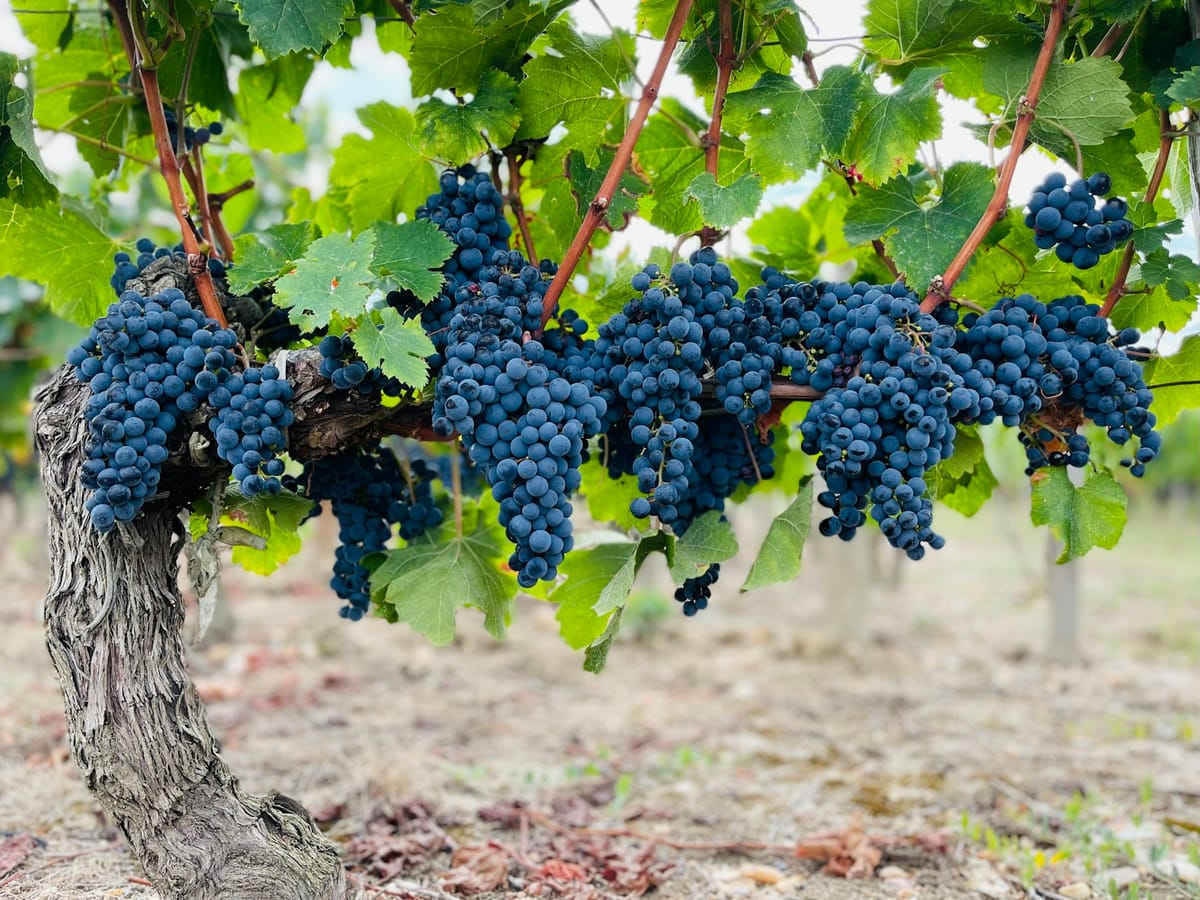
Malbec, Cabernet Sauvignon and Carménère are three of the most common grapes in the Argentine and Chilean reds in the Bebidário catalog. All three were born in France, but each delivers a different style. Below: where each grape comes from, what to expect from it according to Wine Folly, and three labels of each, from cheapest to most expensive, with the flavor as described by the producers.
Malbec: from France to Mendoza
According to Wine Folly, Malbec comes from Southwest France, where it still appears in Cahors, and was taken to Mendoza in the 19th century by the French botanist Michel Pouget; it became Argentina's most important red grape, with the Uco Valley and Luján de Cuyo standing out. The typical style is dry and full-bodied, with medium tannins, medium to low acidity and notes of plum, blackberry, vanilla, tobacco and cocoa.
Trivento Reserve Malbec
Trivento Reserve Malbec
Wine · Argentina
See the full profile →
100% Malbec from Mendoza, by Bodega Trivento, with time in oak; the winery's winemaker, Germán Di Césare, was named 2025 Winemaker of the Year by Tim Atkin MW. The producer mentions cherry, raspberry, strawberry, vanilla and coconut.
Terrazas de los Andes Reserva Malbec
Terrazas de los Andes Reserva Malbec
Wine · Argentina
See the full profile →
Malbec from estate vineyards between 1,070 and 1,650 meters, in Luján de Cuyo and the Uco Valley, with 12 months in used French oak barrels. The technical sheet cites plum, cherry, violet, caramel and cocoa; serve at 14 °C, with grilled or stewed meats.
Catena Malbec
Catena Malbec
Wine · Argentina
See the full profile →
100% Malbec from three high-altitude Catena Zapata vineyards (Gualtallary, Lunlunta and El Cepillo), fermented with native yeasts and aged 11 to 13 months in French oak. The producer's pyramid lists no fruit: cocoa on top, tobacco and leather on the palate and graphite on the finish.
Cabernet Sauvignon: the Bordeaux grape
Wine Folly describes Cabernet Sauvignon as a natural cross of Cabernet Franc and Sauvignon Blanc, born in Bordeaux, and names the Chilean valleys of Aconcagua, Maipo, Cachapoal and Colchagua among its main regions. It is full-bodied, with medium to high tannins and acidity and flavors of black cherry, blackcurrant, cedar, spice and graphite.
Casillero del Diablo Reserva Cabernet Sauvignon
Casillero del Diablo Reserva Cabernet Sauvignon
Wine · Chile
See the full profile →
Cabernet from the Central Valley, by Concha y Toro, with time in barrel. According to the producer, cherry, blackberry, plum, toast and coffee on top and vanilla on the palate; serve between 18 °C and 20 °C, with grilled red meats and aged cheeses.
Marques de Casa Concha Cabernet Sauvignon
Marques de Casa Concha Cabernet Sauvignon
Wine · Chile
See the full profile →
A blend of 86.5% Cabernet Sauvignon from Alto Maipo (Puente Alto and Pirque), completed with Cabernet Franc, Syrah and Petit Verdot. In the 2022 vintage, 60% was aged in French barrels; the technical sheet cites cherry, blackberry, cedar, tar and smoke.
Montes Alpha Cabernet Sauvignon
Montes Alpha Cabernet Sauvignon
Wine · Chile
See the full profile →
The red with which Viña Montes began (first vintage in 1987): grapes from Apalta and Marchigüe, in the Colchagua Valley, with 12 months in French oak, half of it new. The producer mentions blackberry, plum, cherry, vanilla and cocoa, and recommends decanting for 30 minutes and serving between 15 °C and 17 °C.
Carménère: the grape Chile mistook for Merlot
According to Wine Folly, Carménère was a blending grape in Bordeaux until phylloxera nearly wiped it out in the 1870s. It arrived in Chile in the mid-19th century and was taken for Merlot until 1994, when an ampelographer identified it. It has more moderate tannins and acidity than the Cabernets, herbaceous notes of bell pepper and flavors of raspberry, plum, vanilla and paprika.
Concha y Toro Reservado Carmenere
Concha y Toro Reservado Carmenere
Wine · Chile
See the full profile →
Carmenere from the Central Valley D.O., with four months of aging. The pyramid shows plum, black pepper and blackberry; the winery recommends serving at 18 °C, with pasta and fresh cheeses.
Casillero del Diablo Reserva Carmenere
Casillero del Diablo Reserva Carmenere
Wine · Chile
See the full profile →
Carmenere from the Central Valley with time in American oak barrels, according to the technical sheet for the 2020 vintage. The pyramid cites plum, red fruit, coffee and cocoa on top and blackberry, leather and cherry on the palate; serve between 16 °C and 18 °C, with game, grilled vegetables and bean dishes.
Emiliana Adobe Reserva Carmenere
Emiliana Adobe Reserva Carmenere
Wine · Chile
See the full profile →
Organic Carmenere from the Colchagua Valley (89% in the 2023 vintage), with a fifth of the wine spending 8 months in French wood. The producer highlights red fruit, plum and French oak, and suggests spiced chicken or pasta with tomato sauce.
Which to choose
For lean red meat or blue cheese, Wine Folly points to Malbec, with its lower acidity. For grilled meats, pepper sauce and strongly flavored dishes, Cabernet Sauvignon, with more tannin and acidity; in the catalog profile, Marques de Casa Concha and Montes Alpha score 7 out of 10 for tannins, against 5 to 6 for the Malbecs and Carménères on this list. For chimichurri, green sauces, poultry and vegetarian dishes, Carménère, with more moderate tannins and an herbaceous note. If you like a fruity, easy-drinking red, start with the cheapest labels of each grape; if you like structure, move up to those with longer barrel aging.
About the prices
Shelf prices surveyed on 09/24/2026 at Divvino, Zona Sul, Bistek, Savegnago and Giassi, 750 ml bottle; the range runs from the lowest to the highest price, and "one store" indicates that only one chain had the wine. Prices change over time and from store to store.
Drink responsibly.
Sources: Wine Folly, guides to Malbec and Cabernet Sauvignon (Madeline Puckette) and to Carménère (Christine Marsiglio MW), consulted on 09/24/2026; producers' technical sheets (Trivento, Terrazas de los Andes, Catena Zapata, Concha y Toro, Viña Montes, Emiliana); Bebidário price survey at Divvino, Zona Sul, Bistek, Savegnago and Giassi (09/24/2026).