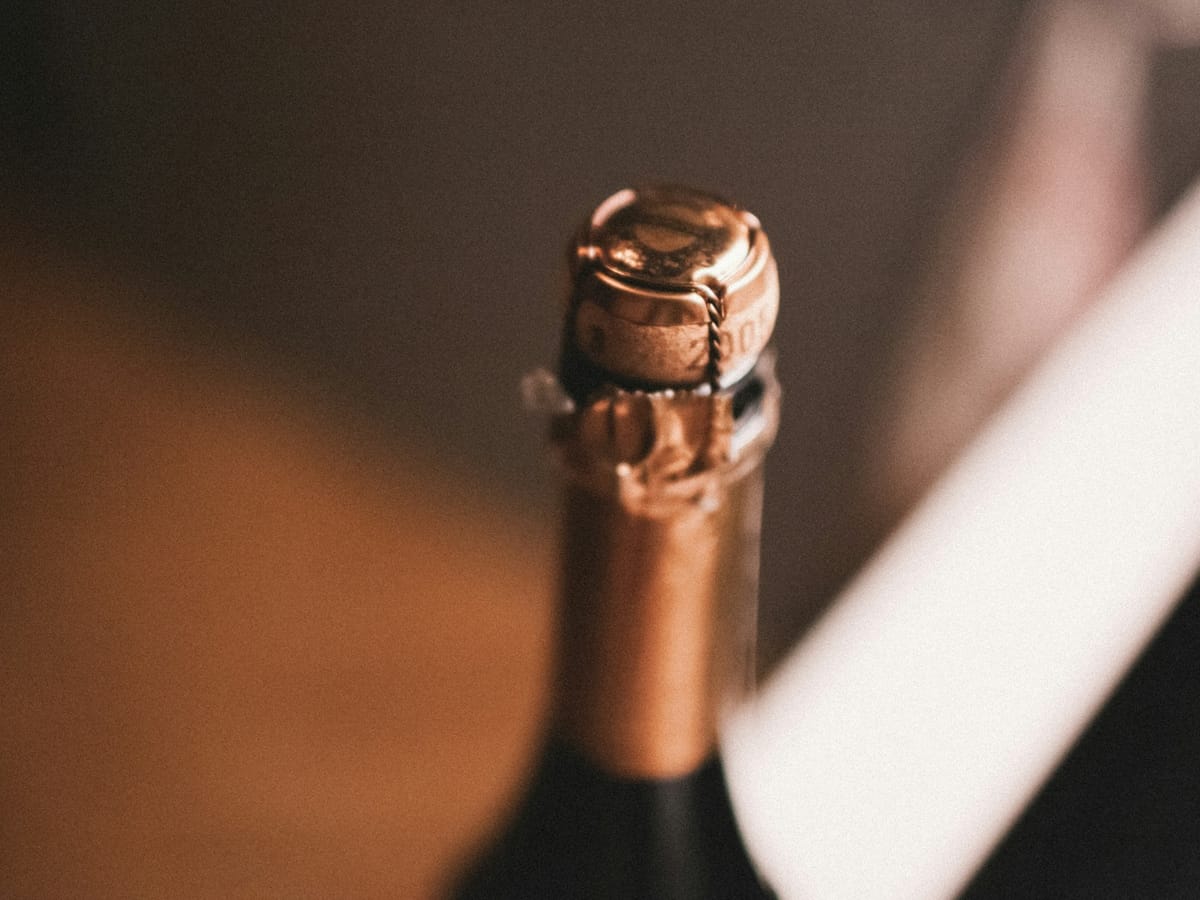
All three are sparkling wines, and in the Bebidário catalog a bottle ranges from R$ 37.90 to R$ 659.70 at the big stores. What separates prosecco, cava and champagne is the origin, the grape and above all the method: where the second fermentation, the one that creates the bubbles, takes place, and how long the wine spends in contact with the dead yeasts, the lees. Below: the rules of each appellation, according to the very bodies that protect them, and the labels from the Bebidário catalog with prices, plus the Brazilian sparkling wine made like champagne.
How we chose
We included labels from the catalog with a price in the 09/24/2026 survey, one or two per style. It is not a quality ranking: the aim is to show what changes from one style to another and how much that costs. Flavor and food come from the producers' sheets; rules, from the bodies of each appellation.
Prosecco: tank and fruit
Prosecco DOC is a place name: nine provinces in northeastern Italy (Treviso, Venice, Vicenza, Padua, Belluno, Gorizia, Pordenone, Trieste and Udine), according to the Consorzio Tutela Prosecco DOC. The grape is mainly Glera. The second fermentation takes place in large closed tanks, autoclaves (the Martinotti or Charmat method), and lasts at least 30 days; the rosé, which contains 10% to 15% Pinot Noir, stays 60 days. The consortium advises checking the label for "Prosecco DOC" and "Prodotto in Italia".
1. Salton Prosecco
Salton Prosecco
Sparkling wine · Brazil
See the full profile →
Brazilian sparkling wine, from the Serra Gaúcha, made solely from the grape that is called Prosecco here (Glera). It is not a Prosecco DOC, but it follows the same Charmat method, with 14 g/L of sugar. Salton describes pear, ripe banana, peach and orange peel; serve between 6 °C and 8 °C, with canapés, risottos and white meats. The catalog also has the Italian Mionetto Prosecco DOC Treviso Brut, which was not on sale at the five stores surveyed; Mionetto recommends drinking it within a year of bottling.
Cava: bottle, lower price
Cava is Spanish, protected by the D.O. Cava, and uses the traditional method: the second fermentation takes place inside the bottle. The typical grapes are Macabeo, the most planted in the appellation, Xarel·lo and Parellada. The minimum time in bottle is 9 months for Cava de Guarda, 18 months for Reserva and 30 months for Gran Reserva, according to the regulatory council.
2. Freixenet Cordon Negro Brut
Freixenet Cordon Negro Brut
Sparkling wine · Spain
See the full profile →
A cava launched in 1974, with Parellada, Macabeo and Xarel·lo, at least 12 months of maturation and 9 g/L of sugar. Freixenet points to green apple, pear, honey and orange peel, with ginger on the finish. Serve between 6 °C and 8 °C. For those who prefer it sweeter, there is Freixenet Carta Nevada Demi-Sec, with 38 g/L.
Champagne: bottle and time
Champagne only comes from the French region of the same name. According to the Comité Champagne, three grapes occupy almost the entire vineyard: Pinot Noir (38%), Chardonnay (31%) and Meunier (31%). The second fermentation is in the bottle, with the liqueur de tirage, and the wine spends at least 15 months in the cellar before release.
3. Moët Impérial Brut
Moët Impérial Brut
Sparkling wine · France
See the full profile →
The non-vintage brut from Moët & Chandon, of Épernay, with Pinot Noir, Meunier and Chardonnay from nearly 280 crus and 20% to 30% reserve wines; dosage of 7 g/L. The house describes green apple, orange peel, chalk and brioche. It suggests serving it with sushi, sashimi and oysters.
4. Veuve Clicquot Yellow Label Brut
Veuve Clicquot Yellow Label Brut
Sparkling wine · France
See the full profile →
The yellow label from Veuve Clicquot, of Reims, with about half Pinot Noir, up to 45% reserve wines and about three years in the cellar; dosage of 9 g/L. The pyramid shows pear, green apple and grapefruit, and brioche on the palate. Serve between 8 °C and 10 °C, with tartares, carpaccios and salads.
Brazilian, by the traditional method
Brazil also makes sparkling wine with second fermentation in the bottle, the same process as champagne and cava. The two labels in the catalog come from the Vale dos Vinhedos (RS).
5. Casa Valduga 130 Brut
Casa Valduga 130 Brut
Sparkling wine · Brazil
See the full profile →
Chardonnay (80%) and Pinot Noir (20%) from the Vale dos Vinhedos, with 36 months on the lees, more than the minimum for non-vintage champagne, and 8.69 g/L of sugar. According to Casa Valduga, it has pineapple and pear, with raisin and toast on the finish; serve between 6 °C and 8 °C. Another in the catalog is Miolo Cuvée Brut, with 12 months on the lees, out of stock at the five stores.
Which to choose
For toasting and drinking fresh, with fruit up front, prosecco or Brazilian Charmat sparkling wine. For bready notes without paying champagne prices, cava or Brazilian traditional-method sparkling wine. Champagne is the special-occasion option: in this survey, it cost more than ten times the price of Salton Prosecco.
About the prices
The prices are shelf prices, surveyed on 09/24/2026 at Divvino, Zona Sul, Bistek, Savegnago and Giassi, 750 ml bottle. The range runs from the lowest to the highest price found; when only one store had the label, we show its price. Prices change over time and from store to store.
Drink responsibly.
Sources: Consorzio Tutela Prosecco DOC, "Consorzio", "Winemaking", "Types" and "Labeling and presentation" pages; D.O. Cava, "Cava de Guarda", "Cava Reserva", "Cava Gran Reserva" and "Grape varieties" pages; Comité Champagne (champagne.fr), "How Champagne is made" and "Grape varieties" pages; producers' technical sheets (Salton, Mionetto, Freixenet, Moët & Chandon, Veuve Clicquot, Casa Valduga, Miolo); all consulted on 09/24/2026; Bebidário price survey at Divvino, Zona Sul, Bistek, Savegnago and Giassi (09/24/2026).